They Owned Me for 72 Hours: My First Access Days

There is a very specific kind of psychological shift that happens when you go from “person with a job” to “person who can be summoned at any time by a computer system that does not care about your feelings.”
And for me, that shift had a name: Access Days. Or "A-days" for short. Six days a month where, as it was very casually explained to us, “we have access to you 24/7.”
Which sounds fine. It sounds reasonable. It sounds like something a normal job might say. But you already know that this is not a normal job.
What that actually means is:
- you don’t know where you’re going,
- you don’t know when you’re leaving,
- you don’t know how long you’ll be gone,
- and you are expected to be ready anyway.
Fully ready. Mentally, physically, logistically, emotionally.
Now, to be fair, Delta’s version of this was slightly less chaotic than what I later learned other airlines were doing, which was basically: “Congratulations, you are now on call for half the month, good luck packing snacks.”
We at least had structure. Sort of. You got assigned six Access Days every month. Sometimes they were stacked together, six in a row, which feels like being temporarily adopted by chaos. Sometimes they were split into two chunks of three, which somehow felt worse.
Each block was a full 72-hour window (the six-day block could be treated like a single window). Seventy-two hours where they could send you anywhere. If you were lucky, that could be Paris or Copenhagen. If you weren't lucky, it could mean Omaha, Nebraska or San Jose, California.
And the schedule? That would show up…eventually. On a good day, you find out the night before. Sometimes at 10 PM. Sometimes earlier if the universe was feeling generous.
More often, though, you'd get your schedule on a phone call at 3:04 in the morning, while you're slapping your brain into instant wakefulness when Crew Scheduling shows up on your caller ID.
So you’d just be sitting there in your crash pad the night before wondering how to pack, thinking “Cool, cool, cool, am I going to Boston tomorrow and need a jacket or am I going to, I don’t know, end up in Jackson Hole, Wyoming with no appropriate footwear?”
One time I got sent on an A-day trip to São Paulo, Brazil in June. I packed a cute spaghetti-strap dress, and some flip flops.
Guess who didn't remember that the hemispheres swap seasons?
It was freezing in São Paulo.
I still went to dinner with the crew, but I had to borrow a couple of layers from other people. Some shoes and socks from another flight attendant. A jacket from a First Officer. I looked like I was just released from a mental hospital, but that churrascaria experience was unbelievably delicious.
There was a bidding system. In theory. In practice, it felt like trying to negotiate with a slot machine. You could put in preferences like:
- “Please don’t schedule me on this one specific day”
- “I’ll take long-haul flights”
- “I like money and rest, ideally both”
And the computer would look at that and go, “that’s adorable. Anyway…”
There were whispers—whispers—about people who had figured out how to game the system. People who were writing scripts or doing something that felt suspiciously like hacking their own lives into a better outcome. I never met those people. I assume they’re still flying peacefully, never once assigned a 5 AM Newark departure.
My very first day as an official, badge-wearing, fully trained flight attendant was an Access Day (of course it was). No easing in. No gentle onboarding. No “let’s shadow someone and learn the ropes.”
Just a 6am phone call. "Hi Margaret, I've got an assignment for you."
Someone had called in sick, last minute, and I got dropped into a flight I did not choose, from an airport I had never been to, operating out of a terminal I didn’t even know existed.
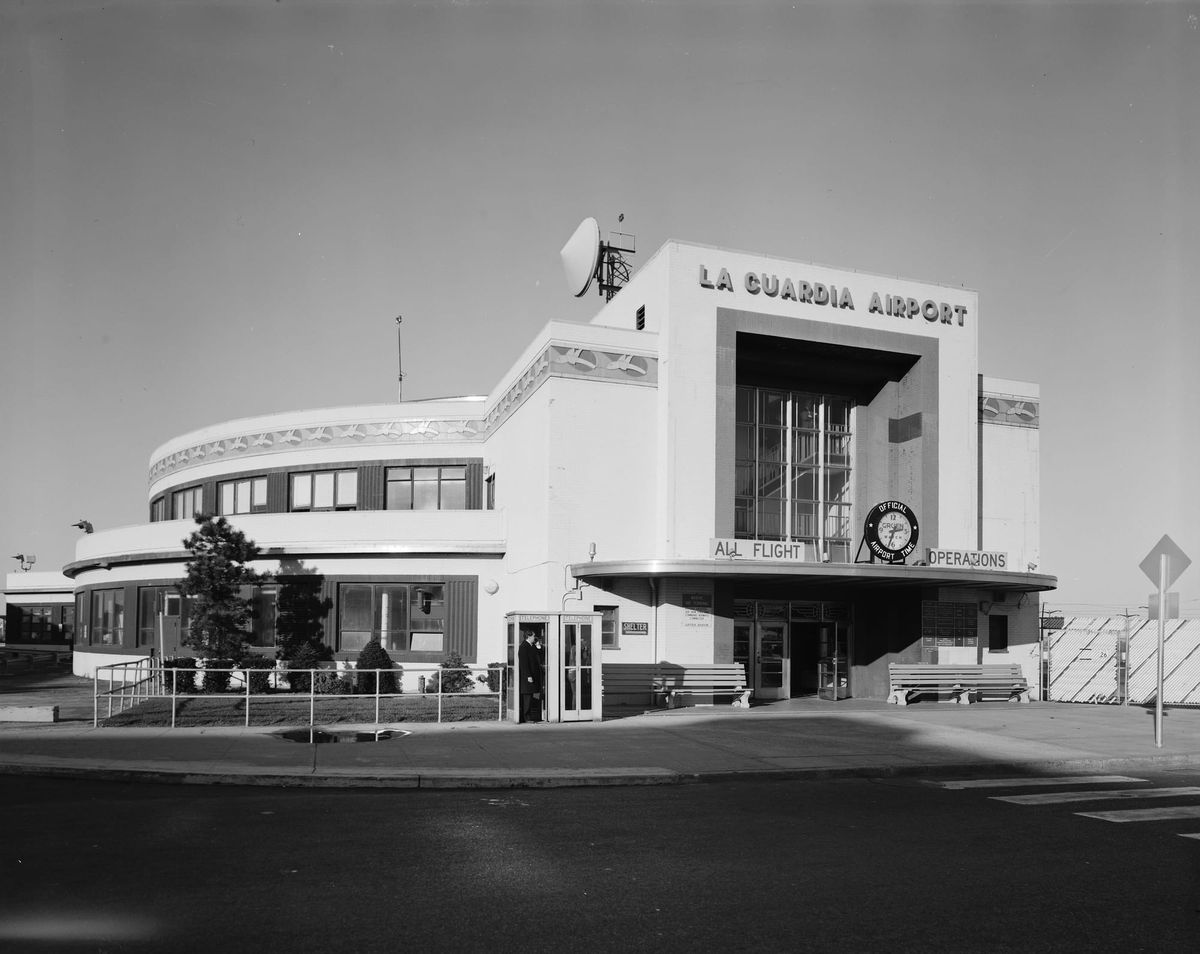
LaGuardia.
Marine Terminal.
Now, if you’ve never heard of the Marine Air Terminal at LaGuardia, don't worry about it. Most people haven’t. It’s like the airport equivalent of a speakeasy but without the sexiness. There was no secret password required. Simply knowing about the place made you a bit of an insider.
The Marine Terminal at LaGuardia (LGA) is in an entirely separate building. It's a smaller operation with a slightly mysterious energy. The flights are shuttles between two or three common, important locations: Washington, D.C.'s Ronald Reagan National Airport (DCA) and Boston's Logan Airport (BOS).
Shuttles are short, fast, high-frequency, and somehow slightly more intense. They used full-size aircraft (MD-88s and MD-90s) but they were rarely full. Maybe 50% occupancy on a busy day. Tickets were more expensive. The clientele was different.
And by “different,” I mean: there were no children. Like, ever. Just a rotating cast of politicians, media personalities, and people who looked like they had Opinions about things.
Okay, once there were two VERY well-behaved children on a shuttle flight, but they were kids of a politician and they knew how the system worked. Not at all like the children flying to or from Orlando.
I remember seeing James Carville on many of those flights. Chris Matthews. Al Sharpton. Paul Ryan. At 27, I did not fully appreciate who these people were. Remember, I had just come back from three years in Canada, blissfully detached from U.S. politics, living my best “I guess this is me now” life.
So I’m standing there like, “Wow, a lot of confident men in suits on this flight,” while the rest of the world would have been like, “…do you understand who you are handing a ginger ale to right now?” and geeking out.
I already told you that they did not teach us how to serve drinks in training. Not really. They showed us the cart. They explained the concept. But there was no real practice. No repetition. No muscle memory.
Because flight attendant training is about one thing: keeping people alive.
Everything else? That’s extra.
The Sprite? Bonus.
The cookies? Bonus.
The illusion that this is a hospitality job? Also bonus.
So there I am. First day. First flight. First assignment. In a terminal I didn’t know existed, serving a clientele I didn’t understand, pushing a beverage cart I had never actually used in real life, on a flight that lasts—what—45 minutes on a good day?
All three of us flight attendants on that flight were brand new. It was ALL of our first flight, collectively. The pilots had to show us where things were in the galley and give us a general timeline of when to start service because of how short the flight is. I remember them being kind, but looking back I can imagine they locked that cockpit door and were like 'OMFG noobs.'
Bless our sweet little hearts, ya know?
In retrospect, those folks on the shuttle flights were the perfect first flight passengers. They knew the drill and were really kind about our confused and awkward drink service. They already knew what drinks they wanted. They made it easy on us.
Back in those days, the shuttle was catered with little lunch boxes that no other flights in the system provided. They knew about those as well, and whether or not they wanted one. They didn't ask questions about what options we had, and they were prepared when we came through gathering garbage.
I have heard many stories about different first days on the job, and it is WILD to throw someone on an international flight they aren't prepared for. The shuttle was tame by comparison.
On the shuttle, service is basically:
“Hi, what would you—
okay great here you go—
trash?—
we’re descending.”
The quick turn around and short duration of these flights made them great for building muscle memory around setting up and breaking down carts. Five flights in one day will help you build efficiency in your process.
My first rotation was a two-day trip:
- LGA -> DCA
- DCA -> LGA
- LGA -> DCA
- DCA -> LGA
- LGA -> DCA
- Layover in Georgetown, downtown Washington, D.C.
- DCA -> LGA
- LGA -> DCA
- DCA -> LGA
This trip is not worth a lot of money, (because we only got paid for the time the plane door closes to the time it opens again, and those are very short flights). But I had a nice 16-hour layover in Washington, D.C. in one of the most beautiful times of year. After a 5-flight day, the second 3-flight day was easy.
Because I got into my home base from that second trip around 4pm, and I was guaranteed 12-hours off before I could be called (FAA regulations), the odds were low I would need to report for a one-day trip (called a "turn") on my final day on call. I ended up waiting by the phone, but I wasn't needed.
Somehow it worked out well. If you look at it from my positivity practices, it was always going to work out in my favor. That’s the other thing about Access Days: I hated them. Everyone hates them. We complain about them, we dread them, we feel like our life is not our own for those 72-hour stretches.
But they are also where many very cool things can happen. They are days where randomness reigns supreme. Where some of the best trips of my career became available to me, even though I was super junior. Like when I got to go to Cairo for my first and only layover.
Access days are the magical times where you end up somewhere you never would have chosen, and it turns out to be the story you tell for the next fifteen years. That's actually how I experienced Portland, Oregon and fell in love with the city.
Because if no one had called in sick that day, I wouldn’t have started my career in the Marine Terminal. I wouldn’t have learned, immediately, that this job was going to be unpredictable in a way that no amount of training could prepare me for. And I definitely wouldn’t have gotten my first lesson in what it actually means to be a flight attendant:
You figure it out.
In real time.
At 35,000 feet.
With a smile.